
- Knee Anatomy
- Knee Conditions
- Knee Procedures
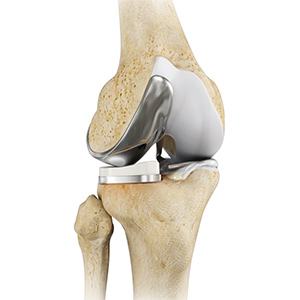
Partial Knee Resurfacing
Partial knee replacement is an alternative to total knee replacement in patients with arthritis on only one side of the knee. Partial knee replacement is a surgical procedure which involves resurfacing and replacement of only the diseased surface of the joint instead of the entire joint.
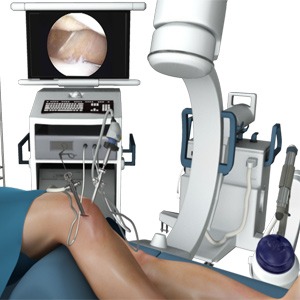
Knee Arthroscopy
Knee arthroscopy is commonly called keyhole surgery or a knee scope. It is an operation which involves looking inside the knee joint using a camera attached to a thin metal tube. Knee arthroscopy is performed as a day case operation, which means that you don’t need to stay overnight. Usually you come in early in the morning and go home early in the afternoon. The hospital will contact you a day or two prior to your operation to confirm the exact times.
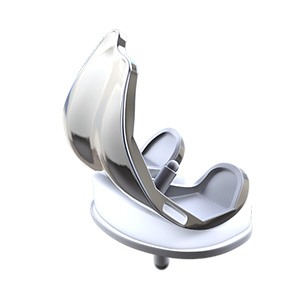
Knee Replacement
Knee replacement is a commonly performed operation for severe knee symptoms usually caused by osteoarthritis. Osteoarthritis is a gradual process in which the surfaces of the knee become damaged and wear away. The bones on either side of the knee joint are usually covered with a hard, smooth layer of cartilage that protects it and allows the surfaces to glide smoothly over each other. This surface can be damaged by injury or general wear and tear. When the process becomes advanced the underlying bone is uncovered. This causes pain, swelling and stiffness because the surface is no longer smooth and the nerve endings in the bone are exposed.
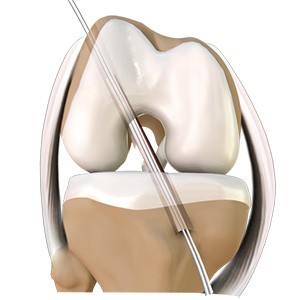
ACL Reconstruction
ACL Injury is a common problem in which one of the main ligaments which keeps your knee stable to walk on is torn. The ACL is a thick fibrous band that sits in the centre of your knee and holds the femur and tibia bones firmly together. It prevents the bones from sliding back and forth too much when you walk and run, and particularly when you change direction quickly.
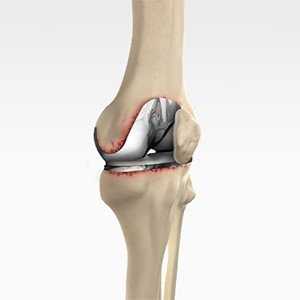
Revision Knee Replacement
Revision knee replacement surgery involves replacing part or all your previous knee prosthesis with a new prosthesis. Although total knee replacement surgery is successful, sometimes the procedure can fail due to various reasons and require a second revision surgery.
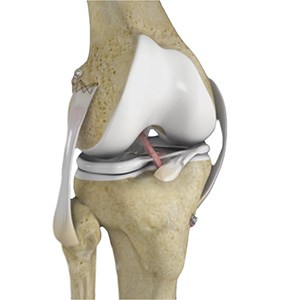
Multi Ligament Reconstruction
Multiligament knee reconstruction is a surgical procedure to repair or replace two or more damaged ligaments of the knee joint. The surgery can be performed using minimally invasive techniques.
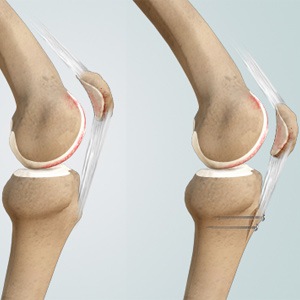
Distal Realignment Procedures
Distal realignment procedures, also known as TTT or tibial tubercle transfer procedures are performed to reposition the kneecap by realigning the tendon under the kneecap to the underlying tibial tubercle. Tibia tubercle is the bony lump on the tibia (bone in the lower leg) below the kneecap. This serves as an attachment point for the patellar ligaments, tendons, and muscles. These procedures are done to prevent patellar subluxation or dislocation.
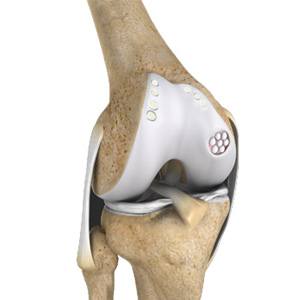
Cartilage Replacement
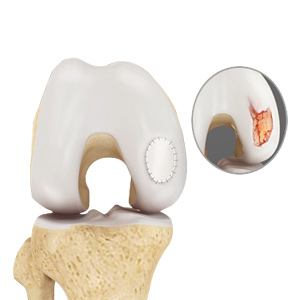
Cartilage replacement is a surgical procedure performed to replace the worn-out cartilage with the new cartilage. It is usually performed to treat patients with small areas of cartilage damage usually caused by sports or traumatic injuries. It is not indicated for those patients who have advanced arthritis of knee. Articular or hyaline cartilage is the tissue that covers bone surface of the knee which helps in smooth interaction between the two bones in knee joint. It has less capacity to repair by itself because there is no direct blood supply to cartilage.
Cartilage Repair and Transplantation
Cartilage restoration is a surgical procedure where orthopaedic surgeons stimulate the growth of new cartilage that restores the normal function. Arthritis condition can be delayed or prevented through this procedure.