
Partial knee replacement is an alternative to total knee replacement in patients with arthritis on only one side of the knee. Partial knee replacement is a surgical procedure which involves resurfacing and replacement of only the diseased surface of the joint instead of the entire joint.
The knee has three compartments, the medial (inside), the lateral (outside) and the patellofemoral (kneecap) compartment. Partial knee resurfacing may be an option depending on the affected surface. During the procedure, your surgeon removes only the damaged area of the bone in the affected knee and fits the implant to that bone.
Partial knee replacement is similar to total knee replacement (see Total Knee Replacement) and has a similar postoperative pathway. The recovery from partial replacement tends to be somewhat faster but it is still a big operation which requires several weeks to recover. Complications and postoperative issues are similar to total knee replacement. Only some people with osteoarthritis are a candidate for partial knee replacement.
Partial Knee Resurfacing Procedure
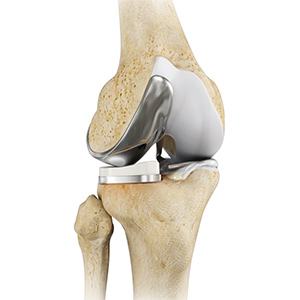
Unicompartmental knee resurfacing is a procedure that resurfaces the affected inner aspect of the femur and tibia. During the procedure, an incision is made along the affected knee exposing the knee joint. The damaged portion of the meniscus along with a part of bone may be removed to create space for the new plastic component. The plastic component is fixed into the new created area. Now the damaged part of the femur along with little bone is removed to create room for the new femoral component. The new metal component is fixed with cement. After fixing the femoral and tibial components the knee is taken through a range of movements.
Patellofemoral knee resurfacing is a procedure that resurfaces only the worn-out kneecap or patella and the groove in the thighbone (trochlea). The procedure is performed through a long incision over the front of the knee. The new component is fixed in place with the use of bone cement and the knee is taken through a range of movements.
"Any surgical or invasive procedure carries risks. Before proceeding, you should seek a second opinion from an appropriately qualified health practitioner."